Neutron movie of coffee making
In briefA short film made with cold neutron imaging at the Paul Scherrer Institut showing a moka pot brewing coffee, sped up four times. The neutron beam makes the water and steam inside the pot visible.
Page 8 of 25
In briefA short film made with cold neutron imaging at the Paul Scherrer Institut showing a moka pot brewing coffee, sped up four times. The neutron beam makes the water and steam inside the pot visible.
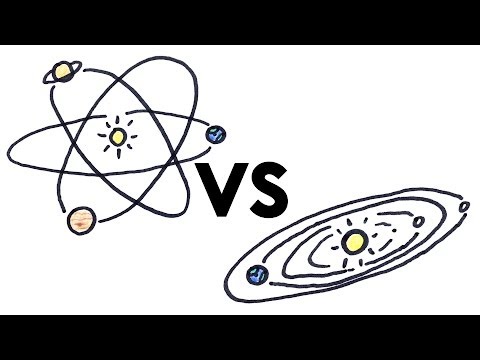
In briefA minutephysics explainer on why the planets orbit in a flat plane. It shows how conserved angular momentum flattens a collapsing cloud of matter into a disk.
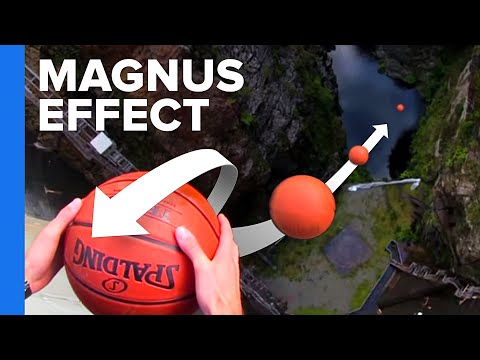
In briefA short Veritasium video showing how far a backspinning basketball would travel dropped off a dam. It demonstrates the Magnus effect and links to Flettner rotor ships and aircraft.
In briefHuygens Optics shows through a laser interference experiment that the question of a photon's size is really about coherence length. It argues that photons exist as energy exchanges between radiation and matter, not as little particles in free space.
In briefFermilab's Don Lincoln explains why light travels slower in water and glass. He knocks down common wrong explanations such as absorption and re-emission, then gives the wave-mechanics reason tied to refractive index.
In briefA Strange Loop 2019 talk by Aaron Cummings on the computing systems aboard Voyager 1 and 2, which control the spacecraft and record and return data decades after launch in 1977.
In briefEager Space examines the practicality of putting data centers in orbit, walking through three scenarios with cost calculations and the launch cost reductions that would be required.
In briefStanford physicist Leonard Susskind gives the first of two mini-lectures on "ER = EPR", the idea that quantum entanglement and wormholes are related. It covers what lies behind black hole horizons.
In briefA 146-minute Merged Podcast episode in which UAP researcher Ryan Graves talks with economist Robin Hanson about UFOs. Topics include the Great Filter, Hanson's grabby aliens model, and the push for more inquiry into UAPs.
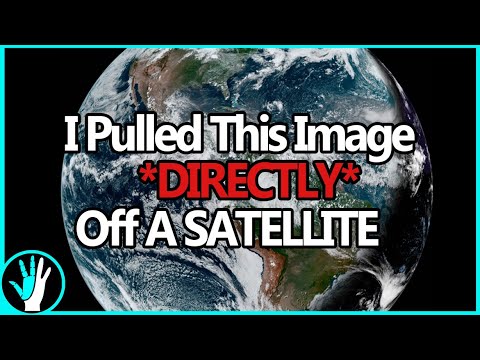
In briefThe Thought Emporium shows how to receive clear images directly from GOES-15, 16 and 17 and Himawari 8 geostationary weather satellites with software-defined radio. It covers the extra effort needed to receive GOES data.
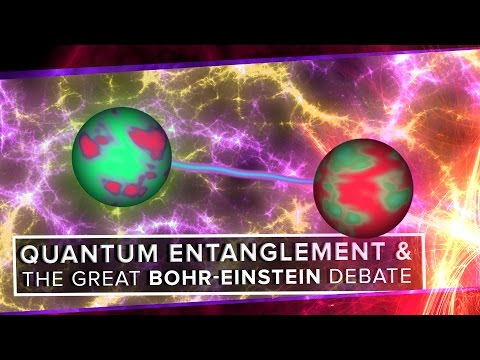
In briefPBS Space Time explains the Bohr-Einstein debate over quantum mechanics and how quantum entanglement settled it. It covers the weirdness of measurement and nonlocal correlations.
In briefVeritasium explains why many real-world systems follow power laws rather than normal distributions. It covers self-organized criticality, with simulations of sandpiles, magnetism and forest fires.
In briefClip from Lex Fridman's podcast with Roger Penrose in which Penrose argues that consciousness is not a computation. He discusses Godel-style arguments and the possible role of quantum effects in microtubules.
In briefChristian Schafmeister's Google Tech Talk on Clasp and CANDO, a Common Lisp implementation on LLVM and C++ used to design molecules, including energy minimization and force-field calculations.
In briefSteve Mould explains homochirality: why biological molecules like sugars and amino acids come in only one handedness. He covers ideas about how this asymmetry might have arisen, touching on meteorite samples and RNA.
In briefPhysicist Angela Collier gives an hour-long critique of Avi Loeb's alien claims and reputation, placing them within the broader topic of physics crackpots. The Loeb discussion starts around the 24 minute mark.
In briefHuygens Optics explores the idea that space is a non-linear elastic medium, and uses simulations to show how wave energy might be confined locally into particle-like objects. It touches on inertia, the Schwinger limit and the vacuum as a medium.
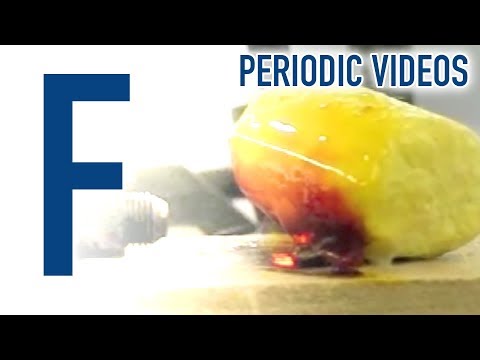
In briefPeriodic Videos visits a fluorine expert to show how reactive the element is in action. It also includes a discussion of fluoride and tooth enamel.
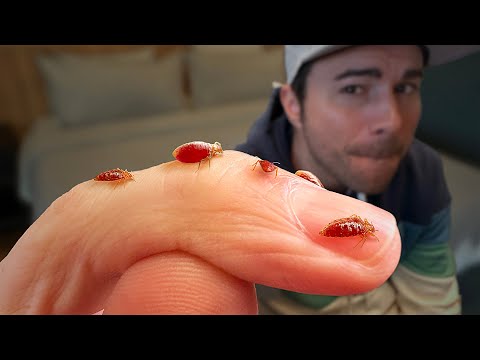
In briefMark Rober digs into bed bugs, testing popular beliefs about where they come from and how to get rid of them. It mixes entertaining experiments with research-based advice on what works and what does not.
In briefTerence Tao and Grant Sanderson of 3Blue1Brown walk through the cosmic distance ladder, showing how humans measured distances from the Earth to the Moon, Sun, planets and beyond. It includes animations and the history behind each step.
In briefGil Scott-Heron's 1970 spoken-word piece, in an official audio upload. It contrasts the Apollo moon program with poverty and neglect at home.
In briefThe first of an eight-part ScienceClic series building general relativity, covering worldlines, proper time and coordinate systems with animated visualizations.
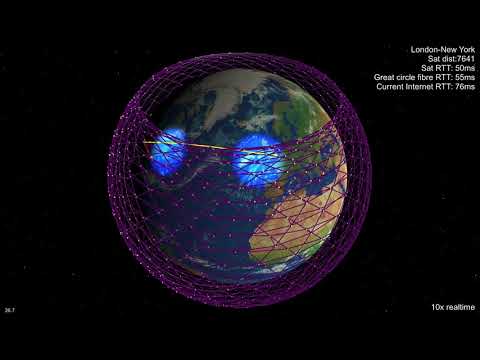
In briefA short visualization from HotNets researchers of routing and latency over SpaceX's proposed Starlink constellation, based on its FCC filings. It shows orbital shells, link topology and how inter-satellite routes could beat terrestrial fiber on long distances.
In briefSmarter Every Day uses high-speed and Schlieren photography to show how a whip crack is a supersonic shockwave formed at the tip. It references academic papers on whip physics.