America's Nerve Gas Arsenal
In briefA 1973 NBC News documentary on the US nerve gas arsenal, covering leaks in Okinawa, a Utah test that killed thousands of sheep, and the long-term hazards of storage sites. It won an Emmy.
Page 9 of 25
In briefA 1973 NBC News documentary on the US nerve gas arsenal, covering leaks in Okinawa, a Utah test that killed thousands of sheep, and the long-term hazards of storage sites. It won an Emmy.
In briefA short Kurzgesagt animation explaining the Great Filter, the idea that finding alien life might be bad news because it implies something usually destroys civilizations. It connects the concept to the Fermi paradox.
In briefNumberphile with Tom Crawford of Oxford explains the Reynolds number, the second of three videos on Navier-Stokes and fluid flow, with demonstrations of laminar versus turbulent behavior.
In briefSynthetic organic chemist James Tour gives a lecture arguing that origin-of-life research is far from explaining how life began. The talk was published by the Discovery Institute and drew sharp criticism.
In briefDestin of Smarter Every Day films a cat falling in high-speed slow motion to show how cats right themselves in midair, and introduces the physics behind it.
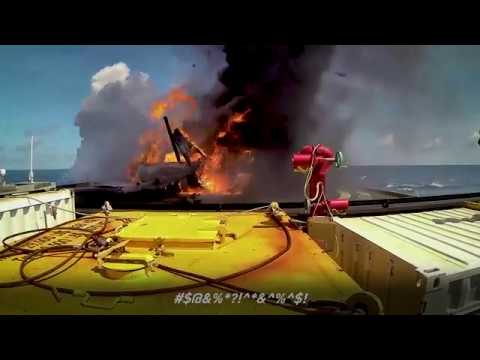
In briefSpaceX's own compilation of failed orbital booster landing attempts, set to sound, showing the crashes before landings succeeded.
In briefA SciShow episode in which Hank Green introduces five of the most dangerous chemicals, from lethal toxins to substances that explode on contact. It is an entertaining overview of extreme chemical hazards.
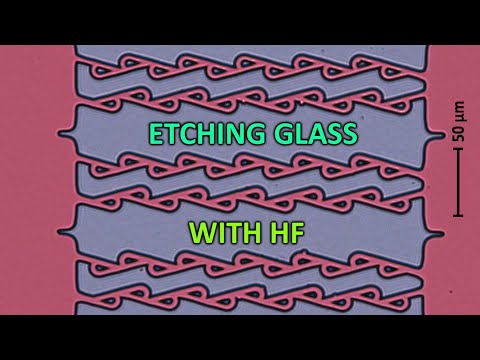
In briefHuygens Optics experiments with etching tiny patterns in glass, covering hydrofluoric acid risks, buffered oxide etch, photoresist and chromium masks, and laser-induced etching. It ends with attempts at microscopic Tesla valves.
In briefVeritasium investigates whether a wind-powered vehicle can travel directly downwind faster than the wind, driving the Blackbird craft himself. The video explains the physics behind a claim some physics professors dispute.
In briefPBS Space Time explains the Higgs field and how the Higgs mechanism gives particles mass within quantum field theory. It is a ten-minute overview for a lay audience.
In briefFraser Cain interviews JPL physicist Slava Turyshev about using the Sun's gravity as a lens to image distant exoplanets. They cover how the lens works, how a spacecraft would align with it, and mission design.
In briefLex Fridman interviews physicist Roger Penrose on consciousness, the limits of computation, quantum mechanics and his cyclic cosmology. It covers his views on AI and the big bang.
In briefAngela Collier, a physicist, revisits her earlier dark matter video, explaining dark matter as a set of observations rather than a theory and discussing MOND comments.
In briefA minutephysics video explaining why a piano cannot be perfectly tuned, comparing equal temperament with just intonation and the math of harmonics.
In briefAll six episodes of the 1983 BBC series Fun to Imagine, in which Richard Feynman muses on jiggling atoms, fire, rubber bands, magnets, electricity and more. He explains how to think about nature and why imagination is fun.
In briefReal Engineering explains the engineering behind the James Webb Space Telescope, including its folding mirror, sunshield, orbit and cooling systems, and why deployment was so difficult.
In briefBen Krasnow of Applied Science builds and operates a simple mass spectrometer, using it to measure potassium isotopes in a salt substitute. He explains the design choices and the theory behind it.
In briefThe first lecture of Leonard Susskind's Stanford Continuing Studies course on modern physics, beginning with classical mechanics. It is the start of a six-quarter sequence on the theoretical foundations of physics.
In briefPractical Engineering compares modern concrete with that of the Roman Empire, covering modern techniques like roller compacted concrete and water-reducing admixtures. It explains the tradeoffs of Roman construction versus reinforced concrete.
In briefA short animation reconstructing a planet's looping orbit using Ptolemy's epicycles and deferents, with the epicycles tracing out the face of Homer Simpson. It shows how enough circles can reproduce nearly any shape.
In briefAn Isaac Arthur episode on arcologies, self-sufficient habitats that could house whole cities, on Earth or on harsh worlds. It covers how such structures might work and what limits their size.
In briefMark Handley of UCL explains, with simulation visualizations, how early Starlink satellites without inter-satellite links could still give low-latency wide-area communication by hopping via ground relays. He shows it can beat fibre on many long paths.
In briefVeritasium recounts a $10,000 bet with a UCLA physics professor over whether a vehicle can travel downwind faster than the wind. He presents the professor's reasoning and demonstrations, including one without aerodynamics.
In briefThe American Museum of Natural History's film flies from the Himalayas out through the atmosphere and solar system to the afterglow of the Big Bang, using its Digital Universe Atlas four-dimensional map.