Blockchain 101 - A Visual Demo
In briefAnders Brownworth gives a basic visual introduction to blockchain using an interactive web demo, covering SHA256 hashes, blocks, chains, distribution, tokens and coinbase transactions.
Page 6 of 15
In briefAnders Brownworth gives a basic visual introduction to blockchain using an interactive web demo, covering SHA256 hashes, blocks, chains, distribution, tokens and coinbase transactions.
In briefGuy Steele's PPoPP 2017 keynote surveying the history of computer science metanotation, including BNF, inference rules, and overline notation. He argues the field's notations are inconsistent and fragmented.
In briefMathologer shows how times table diagrams on a circle produce cardioids and other curves connected to the Mandelbrot set. He explains the patterns and links to a tool for making your own diagrams.
In briefMatt Parker gives a hands-on Royal Institution talk on how four-dimensional shapes appear in a 3D world, with props like straw frames, Mobius strips and a knitted hat. It is a playful general-audience tour of the fourth dimension.
In briefSean Parent's CppCon 2015 talk on better use of standard containers and the goal of having no incidental data structures. It argues that proper containers can greatly simplify code.
In briefA JSConf 2014 talk visually breaking down algorithms behind everyday UI patterns, such as dropdown menus that vanish when the mouse drifts and picking the nearest target to the cursor. It shows how these are implemented in JavaScript.
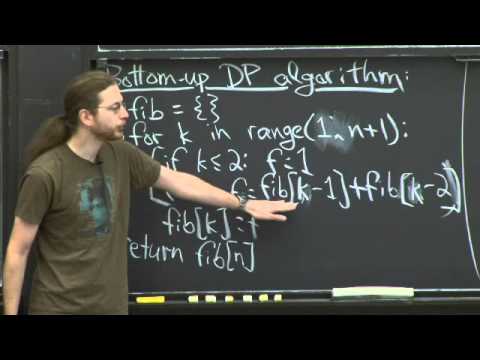
In briefErik Demaine's MIT 6.006 lecture introducing dynamic programming through Fibonacci numbers and shortest paths. It covers memoization, subproblems and optimal substructure.
In briefMathologer examines the infamous Numberphile claim that 1+2+3+... equals -1/12, explaining what is wrong with the calculation and how it connects to real math like the zeta function and analytic continuation.
In briefVsauce's explainer on Zipf's law, the pattern in which the frequency of a word is inversely related to its rank. It shows the pattern across many domains and discusses why it remains unexplained.
In briefRedis Labs and Tim Davis present RedisGraph, which uses GraphBLAS to treat graph queries in Cypher as sparse linear algebra for lower latency.
In briefAditya Siram introduces ATS, a statically typed ML-like language that compiles to C and offers type-safe pointer arithmetic and a full proof language. The Strange Loop talk shows off C interop, concurrency and verification features with non-trivial examples.
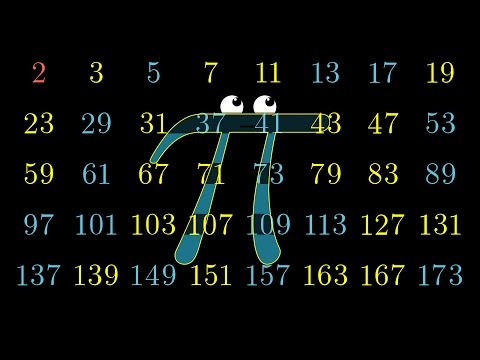
In brief3Blue1Brown shows how pi emerges from prime numbers via complex numbers and sums of squares, culminating in a formula for approximating pi.
In briefVeritasium tells the story of the Fast Fourier Transform, from its use in detecting nuclear tests to Cold War politics, and how it could have changed the arms race. It includes a short, intuitive explanation of what the Fourier transform does.
In briefEdwin Brady presents Idris 2, a rewrite of the Idris dependently typed language, and shows type-driven development in practice. The demos show the compiler filling in whole functions from their types.
In briefTom Scott-style exploration by suckerpinch (Tom7) of generalized anagrams where letters can be broken into pieces, called anagraphs, with a whimsical computational approach.
In briefTwo Google engineers perform a mock coding interview and then discuss best practices for candidates, including asking clarifying questions and communicating while solving.
In briefNumberphile's James Grime introduces quaternions, a type of number beyond the complex numbers, building up from real and complex numbers and explaining why they are useful.
In briefNumberphile's Dr James Grime explains the flaw in the Enigma machine, namely that a letter could never be encrypted to itself, and how that helped the Allies break the code. It touches on the Bombe and Alan Turing.
In briefNumberphile's Tony Padilla and Matt Parker discuss Graham's number, once the largest number used in a mathematical proof, and how enormous it is.
In briefStanford biologist Robert Sapolsky lectures on the evolution of behavior, including the Prisoner's Dilemma and tit-for-tat strategies in animals. It is part of his Human Behavioral Biology course.
In briefA short animated TED-Ed lesson in which two competing ice cream vendors on a beach illustrate why rival shops cluster together. It introduces game theory and the Nash equilibrium through the Hotelling model.
In briefA visualization and sonification of 15 sorting algorithms, from selection sort to bogo sort, run on shuffled integers in six minutes. Each algorithm gets a size and speed scaled to its complexity.
In brief3Blue1Brown builds intuition for Euler's formula, e^(pi i) = -1, using the core ideas of group theory. It treats exponentiation geometrically as rotation and scaling instead of repeated multiplication.
In briefLecture 1 of Harvard's Statistics 110 with Joe Blitzstein, introducing sample spaces, the naive definition of probability, counting, binomial coefficients and the sampling table.