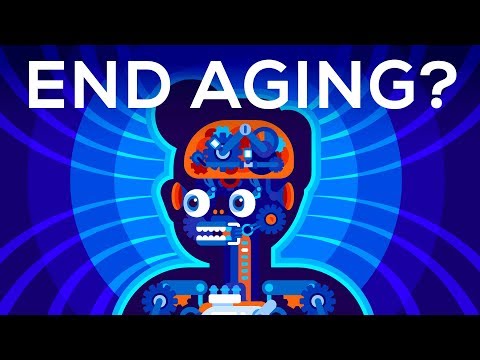
Why Age? Should We End Aging Forever?
In briefKurzgesagt's short animated video asks whether humanity should try to end aging, and argues the case for curing age-related disease. It is part one of a pair, with a second part by CGP Grey.
Page 6 of 25
In briefKurzgesagt's short animated video asks whether humanity should try to end aging, and argues the case for curing age-related disease. It is part one of a pair, with a second part by CGP Grey.
In briefStanford Health Care hosts Christopher Gardner and Robert Lustig on whether all calories are equal, with a focus on processed food and sugar. The talk questions the idea that calories in versus calories out fully explains weight and health.
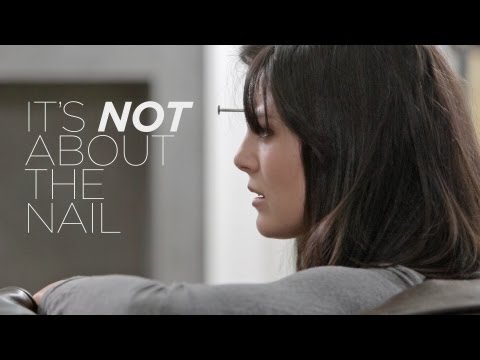
In briefA two-minute comedy sketch in which a woman describes her problems while a visible nail sticks out of her head, and her partner keeps trying to fix it instead of listening. It dramatizes the gap between wanting empathy and being offered solutions.
In briefEduardo Briceno gives a TEDx talk on mindset, contrasting fixed and growth views of ability. He argues that believing abilities can be developed encourages challenge, deliberate practice and grit.
In briefActress Claudia Christian tells how she overcame alcoholism using the Sinclair Method, which uses naltrexone to gradually reduce cravings. She discusses fresh perspectives on treating alcohol use disorder.
In briefA short Healthcare Triage episode by Aaron Carroll arguing that milk gets an undeserved pass in efforts to improve diets. It examines claims about calcium and bone strength and concludes you don't need to drink milk.
In briefPsychologist Barry Schwartz argues in this TED talk that abundant choice makes people more paralyzed and dissatisfied rather than freer and happier.
In briefDr. Jason Fung, a nephrologist, presents his view of the causes of obesity and type 2 diabetes, focusing on hormones such as insulin rather than calories alone. The talk draws on research and his Intensive Dietary Management program.
In briefAsian Boss interviews Professor Kim Woo-joo of Korea University Guro Hospital about COVID-19 in early 2020. He covers masks, testing, aerosol spread, and South Korea's response.
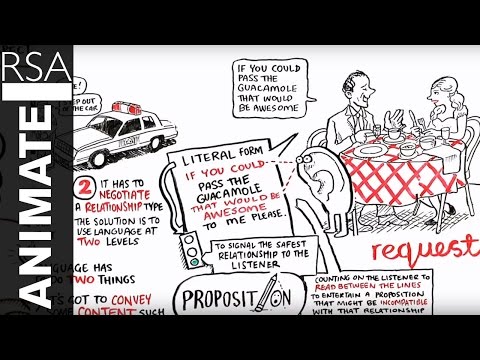
In briefAn RSA Animate in which Steven Pinker explains how the mind builds infinite meanings from finite language, and why people often speak indirectly. It covers ambiguity, politeness and mutual knowledge, including the emperor's new clothes example.
In briefCivilization creator Sid Meier's GDC 2010 talk on applying psychology to game design. He discusses player perception, randomness, and win states, and why designers must account for how players experience events.
In briefKelly Starrett's Talks at Google presentation on staying healthy while desk bound, mixing anatomy and practical mobility advice. It shows how to set up a desk and sit and move to avoid pain.
In briefAstronaut Mike Mullane explains normalisation of deviance, where teams gradually come to accept violations of their own safety standards. He uses the Challenger shuttle disaster as the main case, drawing on NASA's ignored warnings before the launch. It is the first part of a talk given to a fire-fighters' association.
In briefRhonda Patrick interviews Salk Institute researcher Satchidananda Panda about circadian rhythms and the timing of food. They cover time-restricted feeding and its links to obesity, muscle mass, heart health, and light exposure.
In briefJohann Hari's TED talk arguing that addiction is driven largely by disconnection and environment rather than chemical hooks alone. He draws on his personal experience with addicted relatives and on research and policy examples from around the world.
In briefA University of Michigan Medicine demonstration of building a cheap DIY air purifier from a box fan and a HEPA or high-MERV filter using hardware-store parts. It explains why this helps against dust, smoke and viruses and ties it to local air quality readings.
In briefAndrew, diagnosed with early onset Parkinson's at 35, shows how deep brain stimulation surgery has controlled his motor symptoms. The short video shows his tremors with the stimulator off and on.
In briefAn episode of Gwynne Dyer's 1983 documentary series War, about how military basic training turns recruits into soldiers. It covers the psychological side of conditioning.
In briefSandy Pentland of MIT presents his book on social physics, which uses big-data studies of how people interact to explain how ideas spread. He describes findings on collective intelligence and social influence.
In briefRussell Barkley gives the keynote at UNC's 2012 Burnett Seminar on ADHD. He presents it as an executive function disorder and discusses its effects and how to help.
In briefDr. Howard Schubiner presents his research that much chronic pain comes from learned neural pathways rather than structural damage, and outlines a treatment approach based on that view.
In briefRick Beato argues that adults cannot develop true perfect pitch, which he ties to critical-period brain plasticity and language acquisition. He says it can only be developed in young children, and discusses the research behind this.
In briefA cardiologist runs a detailed, skeptical review of the Wim Hof Method, covering the research on cold exposure and breathing techniques. It also teaches how to read scientific statistics critically.
In briefA Kurzgesagt animated explainer on whether aging could be cured within our lifetimes, made with Lifespan.io and the LEAF foundation. It introduces the idea of treating aging as a medical problem.