Bell's Theorem: The Quantum Venn Diagram Paradox
In briefMinutePhysics, with 3Blue1Brown, explains Bell's theorem using a Venn diagram paradox and polarizing filters. It shows why no local hidden variable theory can reproduce quantum correlations.
Page 4 of 25
In briefMinutePhysics, with 3Blue1Brown, explains Bell's theorem using a Venn diagram paradox and polarizing filters. It shows why no local hidden variable theory can reproduce quantum correlations.
In briefNASA JPL engineers explain the final minutes of the Curiosity rover's entry, descent and landing on Mars, which combined aerobraking, a parachute and a skycrane. It lays out the tight sequence of events that all had to work automatically.
In briefSean Carroll gives a Royal Institution talk tracing the history of quantum mechanics from Einstein and Bohr to today. He covers the Copenhagen interpretation and the many worlds interpretation.
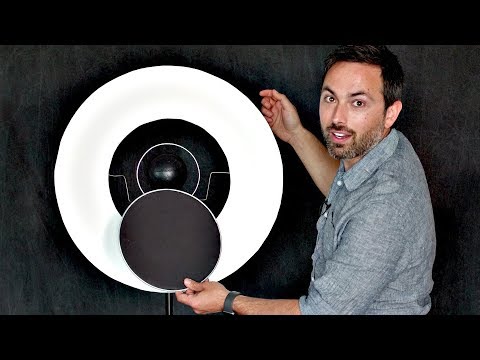
In briefDavid Kipping presents his proposed Terrascope, a telescope that uses Earth's atmosphere as a lens to achieve enormous magnification. He covers the history of telescopes and his path to the idea, plus Sol-scope and Jupiter-scope variants.
In briefKurzgesagt explains how accumulating space junk could trigger a collision cascade (Kessler syndrome) that makes launches too dangerous and traps humanity on Earth.
In briefA PBS Space Time episode explaining how space and time swap roles inside a black hole's event horizon. It is part of the channel's black hole series.
In briefReal Engineering's Brian McManus explains Helion's approach to nuclear fusion: colliding two plasma rings, compressing them magnetically, and capturing energy directly from the changing magnetic flux rather than boiling water. It covers why this pulsed design sidesteps problems of tokamaks and laser fusion.
In briefIsaac Arthur's in-depth look at what it would take to settle and eventually terraform Mars. He covers the challenges and the scale of the work needed to make it a home for humanity.
In briefVeritasium explains how Penrose tilings and quasicrystals overturned the belief that 5-fold symmetry and non-periodic crystals were impossible, including an interview with Paul Steinhardt.
In briefPhysicist Angela Collier argues that dark matter is not a theory but a set of observations, covering rotation curves, the CMB and why modified gravity struggles to explain them.
In briefA 105-minute film of a West African smith family in Burkina Faso smelting iron from ore, from making charcoal and building the kiln to forging tools. It is a cultural recreation filmed for the camera, not current practice.
In briefVeritasium explains why bicycles are stable, arguing that gyroscopic effects are not the answer. The video shows countersteering and an experiment where riders blocked from steering the opposite way cannot turn.
In briefVeritasium's explainer on entropy, presented as one of physics' most important and least understood concepts. It uses examples such as heat engines and the sun's energy flowing through the Earth.
In briefVeritasium explains that the Higgs boson accounts for only a small fraction of everyday mass. Most of a proton's mass comes from the energy of the gluon field binding its quarks.
In briefBenn Jordan investigates infrasound and low-frequency noise from data centers, including xAI's Colossus and a crypto mine, and reports his own experiments on the effects. The video covers the health and community impacts on nearby residents.
In briefMatthias Wandel uses anemometer measurements to find where to place a fan to move the most air through a house at night. He finds that placing the fan some distance back from the window works better.
In briefNightHawkInLight shows how to make radiative sky cooling paint from grocery and hardware store materials, including a novel calcium carbonate microsphere synthesis. The paint can cool a surface below ambient air temperature in direct sunlight without electricity.
In briefVeritasium's Derek Muller visits NASA JPL to see the Mars helicopter Ingenuity before it was mounted on the rover. He explains how it can fly in Mars's thin atmosphere with large, fast-spinning contra-rotating rotors and low mass, and covers power and cold.
In briefAstronaut Mike Mullane explains normalisation of deviance, where teams gradually come to accept violations of their own safety standards. He uses the Challenger shuttle disaster as the main case, drawing on NASA's ignored warnings before the launch. It is the first part of a talk given to a fire-fighters' association.
In briefAn Isaac Arthur episode on civilizations in the dark, post-stellar universe, including black hole farming, accretion disks and the Penrose process as energy sources.
In briefLex Fridman interviews Stephen Wolfram for about three hours on cellular automata, computation, the Wolfram Physics Project and his career with Mathematica and Wolfram Alpha.
In briefSmarter Every Day films Prince Rupert's drops, tempered glass drops, in high-speed slow motion at 130,000 fps. It shows how the drop's heavy internal stress lets the head survive hits while the tail shatters the whole thing.
In briefVeritasium explains what a black hole should look like, using J.P. Luminet's 1979 work and a cardboard 3D model to show how light bends around it. It was made just as the first black hole image was released.
In briefNightHawkInLight shows how to make ultra-white radiative paint that cools surfaces below ambient temperature without electricity. He walks through the research papers and the household-materials process.