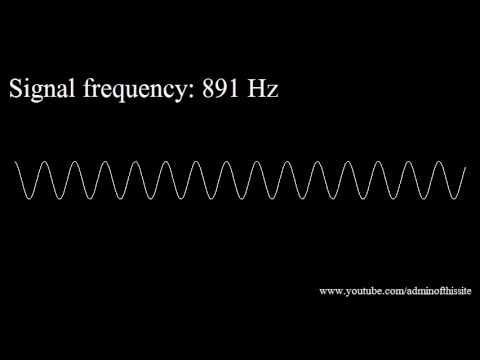
20Hz to 20kHz (Human Audio Spectrum)
In briefA two-minute sine tone sweeping exponentially from 20 Hz to 20 kHz, covering the human hearing range at constant acoustic pressure.
Page 24 of 25
In briefA two-minute sine tone sweeping exponentially from 20 Hz to 20 kHz, covering the human hearing range at constant acoustic pressure.
In briefIn a short interview clip, physicist Murray Gell-Mann talks about working alongside Richard Feynman at Caltech. He describes how the two men clashed in personality and image despite similar brilliance.
In briefKara Swisher and Walt Mossberg interview Elon Musk at Code Conference 2016 about one-way Mars missions, electric vehicles, autonomous cars, SpaceX booster reuse and AI.
In briefStyropyro wires 100 car batteries in parallel to produce more current than a lightning bolt and tests what happens when it is shorted. The experiments, done with other YouTubers, show spectacular effects of extreme current.
In briefA short SpaceX video of the Dragon 2 pad abort test, in which the capsule's thrusters fire to carry it away from the launch pad. It also shows the pad deluge system.
In briefCurious Droid surveys vertical take-off and landing rockets that predate SpaceX and Blue Origin, including the McDonnell Douglas DC-X of the 1990s. It shows that propulsive landing has about 60 years of history.
In briefThunderf00t critiques the MIT and Berkeley metal-organic framework device that claims to pull water from air using only solar heating. He argues the energy accounting does not work and that such devices are essentially fancy dehumidifiers.
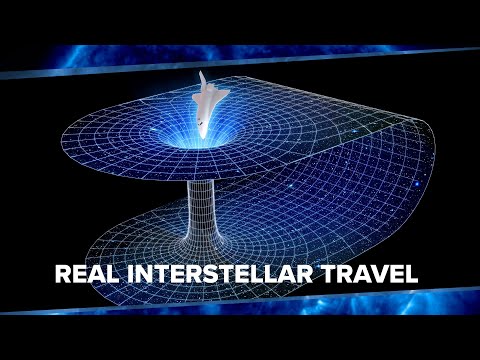
In briefPBS Space Time surveys five realistic options for interstellar travel, from conventional rocket fuel to antimatter and nuclear pulse propulsion. The options rely only on known physics.
In briefShort footage from a NASA space suit test in which a technician is exposed to near-vacuum after an accidental depressurization. It shows the instantaneous effects on a human body.
In briefA time-lapse from ESO's Very Large Telescope showing stars orbiting the supermassive black hole at the Milky Way's center over nearly 20 years.
In briefAlphaPhoenix shows off a new camera that films at two billion frames per second and uses it to film a laser pointer pulse. He investigates a strange quirk in how the speed of light appears on camera.
In briefFootage of DC-X Flight 8 from July 1995 at White Sands, in which the Delta Clipper Experimental reusable rocket turned over into a re-entry profile and re-oriented itself for landing.
In briefA Corning-sponsored video in which Adam Savage and Jamie Hyneman introduce flexible, bendable glass. It covers the history of glass innovation with demonstrations of bendable optical fiber and ultra-thin glass.
In briefA Harvard lecture demonstration in which five metronomes on a movable board gradually fall into synchronization through coupling. Removing the coupling lets them drift out of step.
In briefA clip from a BBC interview in which Richard Feynman is asked why magnets repel and attract. He explains that "why" questions depend on what a person already accepts as fundamental.
In briefDeclassified footage of 1950s tests of Project Orion, the nuclear pulse propulsion concept, including the Hot Rod prototypes flown on conventional high explosives. It shows the pusher-plate idea working in small scale.
In briefA one-minute clip from Cambridge's Prof. Holger Babinsky that debunks the equal transit time explanation of lift. It shows how air actually flows over a wing.
In briefPBS Space Time explains how general relativity permits warp drive in principle and covers recent theoretical advances toward solving the negative energy problem.
In briefFootage of Richard Box's art installation in which fluorescent tubes light up in the ground under high voltage power lines, showing the electric fields they produce.
In briefVeritasium answers criticism that his videos make people look stupid, explaining that teaching must address learners' misconceptions and that holding common beliefs inconsistent with science is not stupidity.
In briefA four-minute demo of the greenhouse effect showing how increased carbon dioxide raises temperature. It uses a simple setup that is dramatic and easy to understand.
In briefEEVblog's Dave Jones critiques Reflect Orbital's plan to sell sunlight to solar farms after dark using orbital mirrors. He walks through the numbers to show the idea does not work out.
In briefPBS Space Time asks whether dark matter could be made of primordial black holes. It walks through the observational constraints that limit this idea.
In briefA SpaceX concept animation of a Falcon 9 and Dragon launch with powered vertical return of both stages and the capsule. It was uploaded to YouTube in 2011.