Carl Sagan - Pale Blue Dot
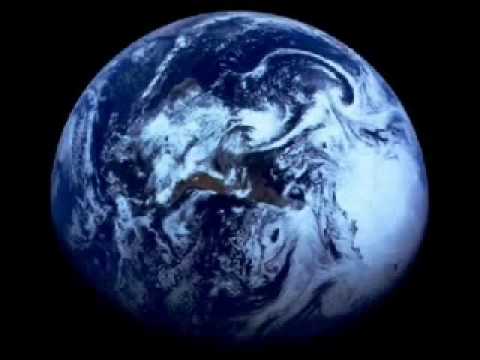
In briefCarl Sagan's narration of the Pale Blue Dot passage, reflecting on the Voyager photograph of Earth as a tiny speck in space. It is a short meditation on humanity's smallness and shared home.
Page 2 of 25
In briefCarl Sagan's narration of the Pale Blue Dot passage, reflecting on the Voyager photograph of Earth as a tiny speck in space. It is a short meditation on humanity's smallness and shared home.
In briefA restored HD upload of the 1983 BBC series Fun to Imagine, in which Richard Feynman talks informally about everyday science. Topics include jiggling atoms, fire, rubber bands, magnets, electricity, mirrors, seeing, big numbers and ways of thinking.
In briefDavid Tong, a Cambridge theoretical physicist, explains at the Royal Institution that the fundamental building blocks of nature are quantum fields rather than particles. He covers what we know about these fields and how they fit into the Standard Model.
In briefTom Scott investigates the claim that the microwave was invented to heat hamsters, and interviews James Lovelock about freezing and microwave-thawing hamsters in the 1950s. It traces early magnetron uses beyond radar.
In briefScienceClic explains why the rubber sheet analogy for general relativity is misleading and offers a new visualization that includes the curvature of time and shows gravity as motion through curved spacetime.
In briefPhysicist Carlo Rovelli gives a public lecture at the Royal Institution on how our understanding of time has changed, from Boltzmann and Einstein to quantum theory and loop quantum gravity. He blends physics, philosophy and art to argue that time is stranger than everyday intuition suggests.
In briefA short clip of Dr. Robert Zubrin, author of The Case for Mars, answering why humanity should go to Mars. He argues that societies grow by challenging themselves and that exploration inspires young people.
In briefSean Carroll introduces his video series on the biggest ideas in physics, such as symmetry, space and matter, as informal discussions with follow-up Q&A videos. This is the short opening video of the series.
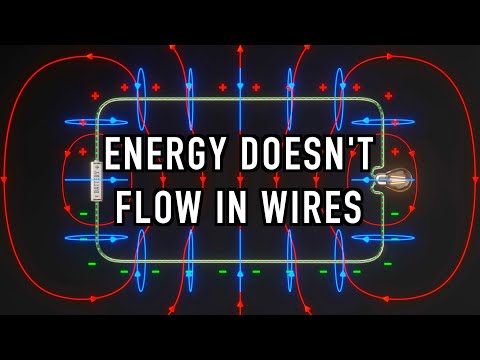
In briefVeritasium argues that electric energy is carried by fields around the wires rather than by electrons moving through them, using a thought experiment with a large circuit.
In briefThe first episode of CuriousMarc's series restoring a real Apollo Guidance Computer, led by AGC expert Mike Stewart. They set up a makeshift lab in a Houston hotel room to open up a rare machine owned by a private collector.
In briefVeritasium explains magnetism as a consequence of special relativity. Length contraction of moving charges makes a current in a wire attract or repel a nearby moving charge.
In briefStanford physicist Leonard Susskind explains what the Higgs mechanism is and what it means to give mass to particles. He also covers what is at stake for physics and cosmology.
In briefPBS Space Time explains the proposal to use the Sun's gravity as a giant lens, sending a train of small light-sail spacecraft to the focal point roughly 550 AU out. It covers how such a telescope could image exoplanets in surprising detail and the engineering challenges involved.
In briefAlphaPhoenix uses a custom high-speed measurement setup to watch voltage waves travel down wires and split at a fork. It answers how electricity knows where to go and how quickly that process happens.
In briefEveryday Astronaut's Tim Dodd runs an hour-long, data-driven analysis of what rockets actually emit and how that compares with airliners and other industries. It breaks down exhaust by propellant type, per-passenger and total emissions, and ways launches could be cleaner.
In briefVeritasium tells the story of Thomas Midgley Jr., who introduced leaded gasoline and CFCs, and covers the science behind lead exposure and ozone damage. It also touches on isotope geochemistry used to uncover the history.
In briefA 1983 BBC interview in which Richard Feynman is asked how magnets work and explains why 'why' questions are hard to answer in everyday terms. He reflects on what counts as an explanation and the limits of analogy.
In briefHuygens Optics explains the Fourier transform and shows how a lens performs one optically. A DLP projector is used as a Fourier filter to do simple pattern recognition on lithographic character patterns.
In briefIsaac Arthur explains the orbital ring, a megastructure launch-assist system that could move bulk cargo cheaply to orbit and beyond. He compares it with space elevators and discusses power transmission.
In briefTechnology Connections explains how old-fashioned non-electronic rice cookers work, using a magnet and spring switch tripped by the Curie point. It shows the thermodynamics and magnetism behind a simple appliance.
In briefAn animated visualization of basic quantum mechanics using a free particle, with simulations based on the actual equations. It covers waves, particles, and how measurement collapses the wavefunction.
In brief3Blue1Brown shows how the uncertainty principle arises from Fourier transforms. A wave packet cannot be narrow in both position and frequency, so the principle is a property of waves rather than of measurement.
In briefPhysicist Angela Collier's roughly hour-long video on how string theory was hyped to the public and what that did to science communication. She traces the history of the theory as a narrative and argues it is interesting but was oversold.
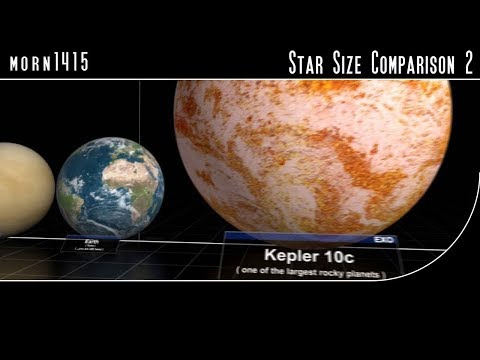
In briefA visual scale comparison of stars and cosmic objects, from planets up to some of the largest known stars, set to music. It is meant to convey the vastness of the universe.