mRNA Translation (Advanced)
In briefA short animation from the DNA Learning Center showing how mRNA carries a gene's message to the ribosome, where tRNA and codons are used to assemble amino acids into a protein.
Page 3 of 25
In briefA short animation from the DNA Learning Center showing how mRNA carries a gene's message to the ribosome, where tRNA and codons are used to assemble amino acids into a protein.
In briefA roughly three-hour San Francisco workshop by Marshall Rosenberg on Nonviolent Communication, with full English subtitles added by a fan. He teaches the model with his jackal and giraffe language examples.
In briefNina Teicholz, author of The Big Fat Surprise, speaks at Low Carb Gold Coast 2017 about the history and health implications of vegetable and seed oils. She covers the political and institutional forces behind dietary fat advice.
In briefCGP Grey explains split-brain patients, where severing the corpus callosum lets the two hemispheres act independently. He uses this to explore the idea of two minds in one head.
In briefPsychologist Melanie Joy's TEDxMunchen talk introduces carnism, the invisible belief system that conditions people to eat some animals but not others, and how it shapes reactions to food choices.
In briefA two-hour Huberman Lab podcast episode on the physiological effects of alcohol on the brain and body at different levels of consumption. It covers genetic predisposition to alcoholism, alcohol metabolism, and how it causes cellular stress and changes thinking and behavior.
In briefThe first episode of John Vervaeke's lecture series on the modern meaning crisis, tracing its history through philosophy, cognitive science, religion and psychology. It introduces the series and its themes.
In briefGary Taubes presents the argument of his book Why We Get Fat to Googlers in 2011. He claims the type of calories matters more than the count, challenges calories-in-calories-out thinking and criticizes the low-fat dietary consensus.
In briefLex Fridman has a three-hour conversation with Joscha Bach about artificial consciousness, the workings of the mind, intelligence and the possibly simulated nature of reality.
In briefCardiologist Dr. Pradip Jamnadas lectures on the rationale for dietary restriction and fasting, covering insulin resistance, glucose intolerance, and low-carb eating over about 81 minutes.
In briefA short How to ADHD explainer, featuring Brendan Mahan, on why simple tasks can feel impossible for people with ADHD. It introduces the 'wall of awful', a pile of past failures, shame and anxiety that builds up in front of a task and blocks starting it.
In briefA Medlife Crisis video by cardiologist Rohin Francis on overdiagnosis and over-screening. It explains how detecting more disease does not necessarily mean saving more lives, and covers harms such as unnecessary treatment.
In briefThe full 1971 Dutch television debate between Noam Chomsky and Michel Foucault on human nature, with subtitles. They discuss creativity, knowledge, power and politics.
In briefA long Tim Ferriss podcast interview with physician Gabor Mate on trauma, addiction, depression, ADHD and ayahuasca. Mate explains how childhood stress and emotional pain underlie many addictions and illnesses.
In briefJack Szostak's lecture covers how cellular life could have arisen from chemistry on the early Earth, starting from the odds of life elsewhere in the galaxy. It is part of a series on protocells and the RNA world.
In briefA clip from Attenborough's Life of Mammals following a San tribesman in the Kalahari on an eight-hour persistence hunt, running down a kudu through harsh heat. It shows tracking, endurance running and the hunter's reaction after the kill.
In briefRobert Sapolsky's lecture on how the body's stress response, evolved for short-term physical emergencies, harms long-term health when triggered by psychological stressors. It was given as the inaugural Fenton-Rhodes Lecture.
In briefGeoffrey Hinton's Google Tech Talk linking machine learning to biology, explaining dropout as a form of model averaging and why sexual reproduction and stochastic spiking neurons may prevent overfitting.
In briefCGP Grey explains how ideas spread like germs, and why content that triggers outrage spreads fastest, using a study on what makes online content viral. He argues that opposing outrage-driven memes feed each other.
In briefVeritasium debunks the idea of learning styles, such as being a visual learner, with an interview with Daniel Willingham and a memory experiment. It argues that a multimodal approach helps everyone.
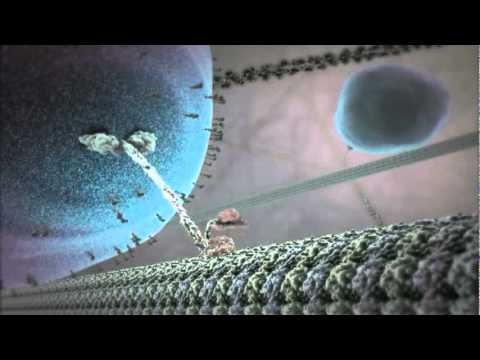
In briefAn award-winning 3D animation by XVIVO for Harvard's BioVisions showing the molecular machinery inside a cell as a white blood cell responds to a stimulus.
In briefVeritasium examines which experts have real expertise, drawing on chess research and work by Klein and Kahneman. It explains that expertise comes from pattern recognition built through deliberate practice in valid, feedback-rich environments.
In briefCGP Grey explains how traffic jams come from human driving behavior such as tailgating and reaction delays, and how leaving gaps and smoothing speed would reduce congestion. It also touches on self-driving cars.
In briefA Capella Science parody of Despacito that sings through evolutionary developmental biology, explaining how a single cell becomes a body, including body-axis genes and dormant snake leg DNA. It runs about four minutes.