A Scientist Spilled 2 Drops Organic Mercury On Her Hand. This Is What Happened To Her Brain.
In briefChubbyemu narrates the true case of a professor who spilled two drops of dimethylmercury on her hand and suffered fatal neurological damage.
Page 18 of 25
In briefChubbyemu narrates the true case of a professor who spilled two drops of dimethylmercury on her hand and suffered fatal neurological damage.
In briefAndrew Huberman interviews Stanford addiction psychiatrist Dr. Anna Lembke about the biology and psychology of addiction to drugs, food, gambling, screens and more. They discuss dopamine, the opioid crisis, and her book Dopamine Nation.
In briefJoe Rogan interviews epidemiologist Michael Osterholm in March 2020 about the coronavirus. They cover how it spreads, masks, hygiene, social distancing, school closures and vaccine timelines.
In briefDavid Shaw of D. E. Shaw Research presents Anton, a special-purpose machine that speeds up biomolecular simulations about a hundred-fold. The lecture covers molecular dynamics and how simulation helps understand how drugs bind.
In briefChubbyemu presents a case study of a man who followed AI health advice, replaced salt with sodium bromide and developed bromism with severe neurological effects. It is told as a dramatized medical case by a doctor.
In briefA Veritasium video on survivor bias, explaining how an observed sample can be incomplete and skewed. It uses examples such as bombers and famous success stories.
In briefAn excerpt from Russell Barkley's lecture on ADHD, focusing on inhibition, impulsivity and emotional regulation. It explains ADHD as a problem of response inhibition and emotional impulsivity.
In briefA nutrition-science explainer reviewing the human evidence on whether seed oils cause inflammation. It looks at nine different seed oils, heated oils, and genetic variability, and compares omega-6 intake with saturated fat.
In briefA short FoundMyFitness explainer on the trade-off between growth hormone/IGF-1 and longevity. Higher IGF-1 helps muscle and cognition, while lower levels are linked to longer lifespan and stress resistance.
In briefA VICE interview with Martin Shkreli about the 5000 percent price hike on a drug for AIDS-related infections and his role as the world's villain.
In briefPhilosopher Daniel Dennett visits Google to discuss his book Intuition Pumps and Other Tools for Thinking, describing thought experiments and thinking tools across psychology, biology, computer science and physics.
In briefAmateur footage from the 2009 Sasquatch music festival in which one person starts dancing alone and a crowd gradually joins in, turning it into a dance party.
In briefA very short microscope clip of a neutrophil chasing a Staphylococcus aureus bacterium, originally from David Rogers at Vanderbilt University. It is a widely reposted piece of immune-system footage.
In briefA Last Week Tonight segment on food safety in the US. It looks at the FDA, the USDA and industry groups such as the Association for Dressings and Sauces, and how little enforcement there is.
In briefA short social experiment video in which people mimic the New York subway practice of workers pointing at signs and signals. It makes the point cheerfully.
In briefPBS Space Time considers whether life could be based on silicon instead of carbon, comparing the two elements' chemistry and why silicon is the most plausible alternative.
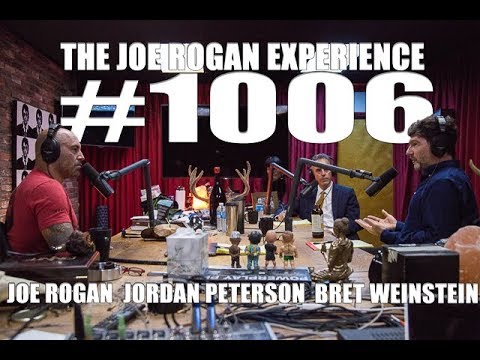
In briefA long Joe Rogan Experience podcast episode with psychologist Jordan Peterson and biologist Bret Weinstein, recorded during the controversy at Evergreen State College. They discuss campus politics, polarization, ideology and related social topics.
In briefA roughly two and a half hour Noonautics panel on DMT research moderated by Graham Hancock with Andrew Gallimore and Rick Strassman. It discusses planned DMTx experiments and reported DMT experiences.
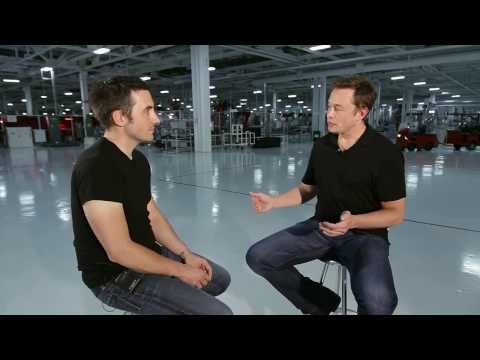
In briefA short excerpt of Elon Musk, interviewed by Kevin Rose, explaining first-principles reasoning with the example of the car versus improving horse carriages. He warns it takes much more mental energy than reasoning by analogy.
In briefWilliam Li presents anti-angiogenesis, the idea of cutting off the blood supply that feeds tumors, and argues that certain foods can help do this. It is a TED-Ed version of his TED talk.
In briefA short clip, titled Orwell Comes to America, on reasoning and perception. One HN user links it repeatedly as the science showing human minds are bad at reasoning and do not see reality as it is.
In briefA Jimmy Kimmel segment in which interviewers at SXSW ask festival-goers about made-up bands, and many people confidently claim to know and like them.
In briefA 60 Minutes Australia segment on people with highly superior autobiographical memory, who can recall the details of any day of their lives. It presents the rare phenomenon through interviews with people who have it.
In briefA two-minute BBC Horizon clip demonstrating the McGurk effect, where what you see of a speaker's mouth changes the sound you hear.