All you need to know to understand 5G
In briefPhysicist Sabine Hossenfelder explains how 5G works and examines the health concerns around millimeter wave radiation. She reviews the scientific evidence and the open letters from scientists.
Page 16 of 25
In briefPhysicist Sabine Hossenfelder explains how 5G works and examines the health concerns around millimeter wave radiation. She reviews the scientific evidence and the open letters from scientists.
In briefPsychologist Kelly McGonigal argues in this TED talk that stress is harmful mainly if you believe it is, and that reaching out to others is an underrated way to reduce its effects.
In briefA BBC Earth clip from Super Powered Owls in which the team uses sensitive sound equipment to compare owl flight with other birds. It shows why owls fly almost silently.
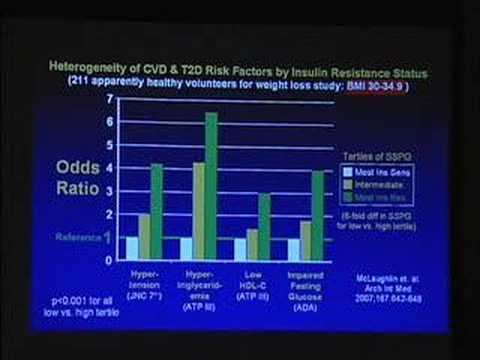
In briefStanford's Christopher Gardner presents his large, long comparison of four popular diets under real-world conditions, in which the lowest-carbohydrate Atkins diet came out on top.
In briefAn RSA Animate illustrating a lecture by psychologist Philip Zimbardo on how people's perspectives on time (past, present, future) shape work, health and well-being.
In briefDr. Michael Greger gives a live presentation on evidence-based weight loss, previewing his book How Not to Diet. He focuses on foods that aid weight loss while also supporting health and longevity.
In briefA recording of Charlie Munger's 1995 Harvard speech on the psychology of human misjudgment. He walks through a list of cognitive biases such as incentives, social proof, and overoptimism.
In briefAmy Cuddy's TED talk arguing that adopting expansive postures, or power posing, can boost feelings of confidence and affect success. A note on the video points to the later reproducibility debate over its findings.
In briefUCLA professor Dario Nardi presents brain-imaging research suggesting that different Myers-Briggs personality types use their brains in different ways. He discusses how each type can reach a state of creative flow. It is aimed at a general audience.
In briefA clip of psychologist Jordan Peterson discussing why few women reach high-paying, high-pressure jobs. He talks about the tension between a demanding career and having a family.
In briefA Kurzgesagt animated explainer on meat: why people love it and what it costs animals, the environment and health. It lays out the complicated trade-offs of meat production and consumption.
In briefPsychiatrist Daniel Amen discusses lessons from 83,000 brain scans, arguing that brain activity patterns relate to psychological symptoms and that you can improve your brain.
In briefPhilosopher Dan Dennett argues in a TED talk that we do not understand our own consciousness and that our brains often fool us. He uses perceptual examples, including a painting that invites the viewer to fill in detail.
In briefNeurologist Dr. Matthew Phillips talks at Low Carb Gold Coast 2022 about fasting and ketogenic diets as therapies for cancer and neurodegenerative disease. He focuses on mitochondrial dysfunction and brain energy metabolism.
In briefCGP Grey asks whether Star Trek-style teleportation would kill you and recreate a copy, working through the philosophy of identity and the Ship of Theseus. It is a short animated explainer.
In briefA pulmonologist and critical care physician explains how COVID-19 can lead to pneumonia and acute respiratory distress syndrome. He covers evidence-based ARDS treatments such as low tidal volume ventilation.
In briefA short clip of Robert Sapolsky on how social hierarchy generates chronic stress, drawing on baboon research. It links rank-related stress to heart health and life expectancy.
In briefA BBC Horizon clip demonstrating the McGurk effect, where the same audio sounds like different syllables depending on the mouth movements you see. It shows that people integrate visual speech information into what they hear.
In briefCGP Grey's short explainer arguing that caffeine addiction is mostly harmless and may even be beneficial. It covers what caffeine does in the body.
In briefA Huberman Lab episode on setting up a workspace for productivity, focus and creativity, covering light, posture, movement and sound. It touches on ideas like ceiling height and the effect of screens on the brain.
In briefAn Adam Ruins Everything segment arguing that purebred dogs suffer from inbreeding and genetic disorders, and that mutts are healthier. It follows the show's comedic debunking style.
In briefSmarter Every Day host Destin Sandlin tries to hover a helicopter and finds it very hard. The video shows how the constant coordinated corrections across several control axes feel at first and how learning makes them automatic.
In briefVsauce explores qualia and whether different people experience colors the same way. It draws on color blindness, Mary's room, the explanatory gap and subjective experience.
In briefA long video essay on the claim that chemicals such as atrazine are feminizing frogs. It covers the science, the EPA and the role of chemical companies.