Jordan Peterson - Pareto Distributions
In briefA short clip of Jordan Peterson explaining Pareto distributions, using Soviet farm collectivization and the resulting famine as context. It also covers how outcomes concentrate in a few people.
Page 13 of 25
In briefA short clip of Jordan Peterson explaining Pareto distributions, using Soviet farm collectivization and the resulting famine as context. It also covers how outcomes concentrate in a few people.
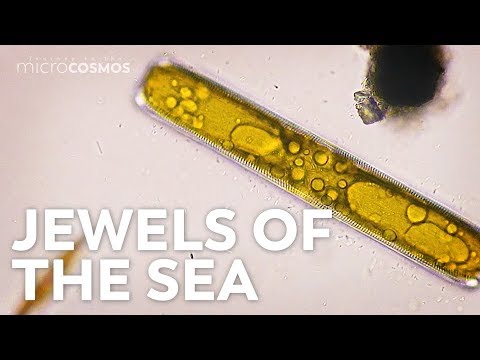
In briefAn episode of Journey to the Microcosmos, hosted by Hank Green, about diatoms, single-celled algae with glass shells. It covers their role in producing a large share of Earth's oxygen and their uses in beer filtering, paint and kitty litter.
In briefA Foresight Institute workshop video with two talks: Shawn Douglas on nanoscale instruments for visualizing small proteins, and Bret Victor on Dynamicland. Victor's part shows biomolecular design built in his Realtalk system with physical objects.
In briefBenn Jordan's video about storing a PNG image in a living bird, a starling that learns to reproduce encoded sounds. It mixes ornithology, audio engineering, and data encoding.
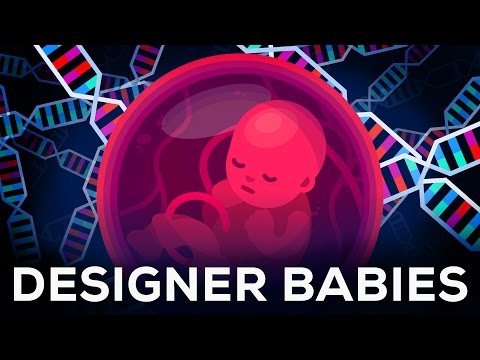
In briefKurzgesagt's animated explainer on CRISPR gene editing, covering how the technology works and what it could mean for curing disease, designer babies and aging. It frames genetic engineering as an irreversible change coming to humanity.
In briefLex Fridman interviews Jeff Hawkins, founder of Numenta and author of On Intelligence, about the Thousand Brains Theory and reverse-engineering the neocortex. They also cover Hierarchical Temporal Memory and brain-inspired AI architectures.
In briefJohn Oliver's Last Week Tonight segment on vaccines, arguing that the benefits far outweigh the minuscule risks and discussing why some parents still doubt their safety.
In briefJohns Hopkins APL shows Les Baugh, a bilateral shoulder-level amputee, controlling two Modular Prosthetic Limbs by thought after a short training period. Nerves rerouted to his chest drive the arms.
In briefLex Fridman interviews MIT psycholinguist Edward Gibson on human language, syntax, grammar and how large language models relate to them. The conversation runs nearly three hours.
In briefAndrew Huberman introduces how the nervous system produces sensation, emotion and behavior, and how neuroplasticity lets us change it. It covers neurons, synapses, brain chemicals and the rhythms governing focus, learning and sleep.
In briefJoscha Bach's 32C3 talk applies computational theories of mind to questions of meaning, emotion, and love, asking how computation can explain irrational-seeming human experience.
In briefA BBC Weird Nature clip about vervet monkeys in the Caribbean that drink alcohol, and how they split into heavy drinkers, social drinkers and teetotalers.
In briefVeritasium tells the story of Kary Mullis, the surfer and LSD user who invented PCR and won a Nobel Prize. It explains how PCR works and how it was developed at Cetus.
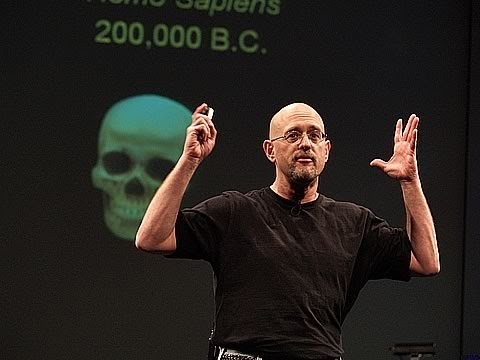
In briefPsychologist Dan Gilbert argues in this TED talk that our psychological immune system lets us become happy even when things do not go as planned. He challenges the idea that we will be miserable if we do not get what we want.
In briefA Veritasium video on AlphaFold, DeepMind's protein structure prediction system, and the protein design work it enabled. It features interviews with John Jumper and with David Baker's protein design group and explains why predicting protein folding matters.
In briefJoe Rogan interviews Daryl Davis, a Black blues musician who has befriended Ku Klux Klan members and helped many leave the group. He tells stories of how he talked with them.
In briefPsychologist Irving Kirsch gives a distinguished lecture on antidepressant trials and the placebo effect. He argues drug-placebo differences are small outside severe depression.
In briefA Wendover Productions documentary-style video on how Zipline delivers blood and medical supplies by drone in Rwanda. It covers the catapult launch, parachute drop and the logistics behind it.
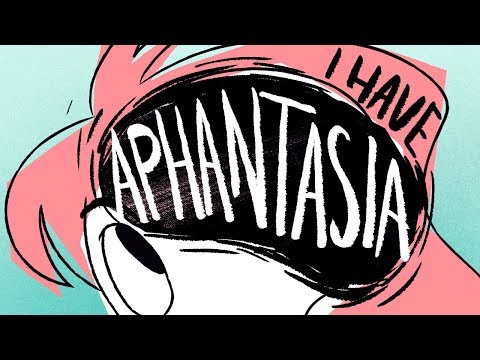
In briefAn artist describes discovering she has aphantasia, the inability to form mental images, and how it affects her work. She asks viewers about their own visualization.
In briefA hidden-camera social experiment in a park where three people try to steal a bike in the open: a white teenager, a black teenager and a young woman. It records how bystanders react to each.
In briefBobby McFerrin uses audience participation at a World Science Festival event to demonstrate how instinctively people follow the pentatonic scale.
In briefA 2020 UC San Diego event with Roger Penrose and Stuart Hameroff presenting their Orch OR theory that consciousness arises from quantum processes in brain microtubules, followed by a conversation with Roger Bingham.
In briefA social experiment in which an 18-year-old woman runs a Tinder profile as a man and sees how differently the dating experience plays out for men.
In briefJohn Green explains why the US spends far more on health care than other countries, going through insurers, drug companies, hospitals and lawyers. He argues the causes are complicated rather than a simple blame game.