Why is it so Easy to be Thin in Japan?
In briefJoseph Everett compares the food environment of the US, with roughly 30% obesity, to Japan's, around 3.5%. He argues that what is available and normal to eat explains much of the gap.
Page 11 of 25
In briefJoseph Everett compares the food environment of the US, with roughly 30% obesity, to Japan's, around 3.5%. He argues that what is available and normal to eat explains much of the gap.
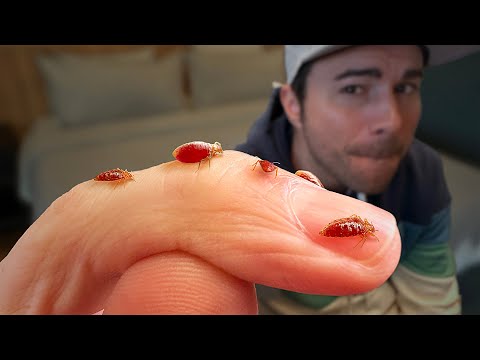
In briefMark Rober digs into bed bugs, testing popular beliefs about where they come from and how to get rid of them. It mixes entertaining experiments with research-based advice on what works and what does not.
In briefPsychologist Philip Zimbardo explains how ordinary people can be pushed into doing evil by situations and systems. He draws on the Stanford prison experiment and unseen Abu Ghraib photos, then turns to the opposite case: how ordinary people can become heroes.
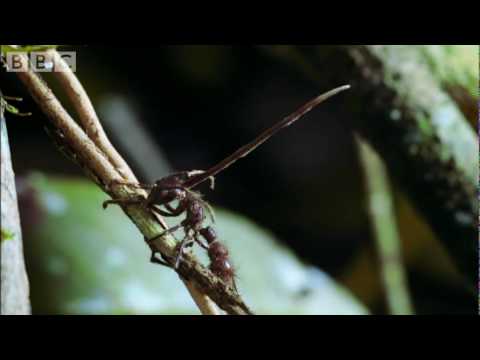
In briefA three-minute clip from BBC's Planet Earth narrated by David Attenborough about Cordyceps, the fungus that infects insects and takes over their behavior. It shows an infected ant and its demise.
In briefA long George Hotz livestream in which he explores the coronavirus genome and molecular biology from scratch using a browser and Python, hacking on the science in real time.
In briefKathy Sierra's Fluent 2015 keynote on the one metaskill for developers: the ability to come up to speed quickly and stay there. She covers how people learn, cognitive resources versus willpower, and building skill.
In briefA Harvard Business Review video with tactics for getting better at small talk and enjoying it, such as setting goals, allowing pauses, and starting and ending conversations.
In briefBerkeley sleep scientist Matthew Walker presents the science of sleep and dreams and how sleep affects health and lifespan, based on his book Why We Sleep.
In briefAndres Gomez Emilsson of the Qualia Research Institute presents a model of DMT experiences using hyperbolic geometry and dynamical systems theory. He describes how different intoxication levels correspond to changing curvature and information content of experience.
In briefSynthetic organic chemist James Tour gives a lecture arguing that origin-of-life research is far from explaining how life began. The talk was published by the Discovery Institute and drew sharp criticism.
In briefRon Vale of UCSF and HHMI gives an introductory lecture on kinesin, dynein and myosin motor proteins. He covers their roles in cells and how they turn ATP hydrolysis into directed motion and force.
In briefDestin of Smarter Every Day films a cat falling in high-speed slow motion to show how cats right themselves in midair, and introduces the physics behind it.
In briefLex Fridman interviews physicist Roger Penrose on consciousness, the limits of computation, quantum mechanics and his cyclic cosmology. It covers his views on AI and the big bang.
In briefA Veritasium video that runs the 2-4-8 rule-guessing puzzle on people to show how they test only examples that confirm their hypothesis. It uses this to illustrate confirmation bias and falsification.
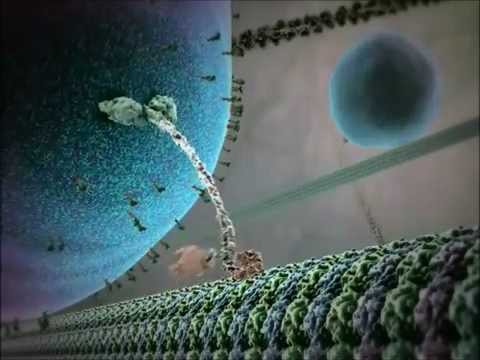
In briefA very short animation of a kinesin motor protein walking along a microtubule inside a cell, carrying cargo.
In briefA Kurzgesagt animation about how the immune system constantly detects and kills cells that are turning cancerous. It explains what cancer cells are and why stopping them is so hard.
In briefFortNine's tongue-in-cheek guide to why drivers fail to see motorcyclists and how riders can make themselves more visible. It touches on perception psychology, including the role of saccades.
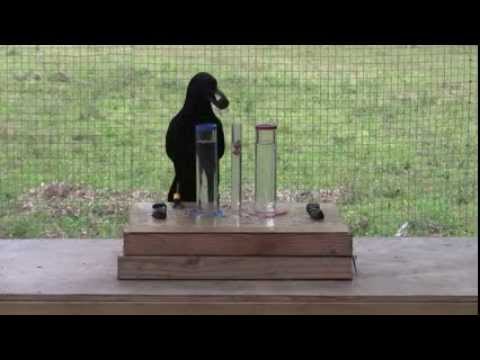
In briefA silent PLOS ONE video of New Caledonian crows solving Aesop's Fable puzzles by dropping objects to raise water and reach food. It shows example trials from experiments testing causal understanding of water displacement.
In briefA short BBC Earth clip from David Attenborough's Life of Birds showing a lyrebird imitating sounds, including a chainsaw and camera shutter, so accurately it is hard to tell from the real thing.
In briefA Google Tech Talk by Sebastian Deterding on gamification. It looks at what points and badges get wrong and what lessons game design offers for non-game applications.
In briefA BBC Earth clip from Inside the Animal Mind in which a crow named 007 solves an eight-step puzzle to get a reward. It showcases crow problem-solving.
In briefEsther Gokhale's short TEDx talk argues that the natural human spine is curved rather than straight and teaches a 'primal posture' for sitting without back pain.
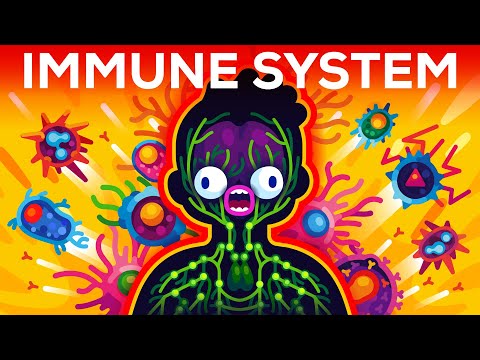
In briefA Kurzgesagt animation giving a big-picture tour of the human immune system, its organs, transport network, and the cells it produces every day. It accompanies their IMMUNE book.
In briefKaren Sandler's keynote at Linux.conf.au 2012 on the software running inside medical devices such as her own pacemaker-defibrillator. She discusses the difficulty of learning what code runs in life-sustaining devices and why open source matters there.