Sci-Fi Short Film “Slaughterbots” | DUST
In briefSlaughterbots is a short sci-fi film in which swarms of cheap autonomous drones are programmed to kill targets by profile. It was made as arms-control advocacy against autonomous weapons.
Page 5 of 24
In briefSlaughterbots is a short sci-fi film in which swarms of cheap autonomous drones are programmed to kill targets by profile. It was made as arms-control advocacy against autonomous weapons.
In briefAli Rahimi's NIPS 2017 Test-of-Time award talk, in which he argues that modern machine learning has become alchemy, working without being rigorously understood. He calls for more rigor and understanding in the field.
In briefRobert Erdmann, a materials scientist at the Rijksmuseum, gives a PyCon keynote on the ultra-high-resolution imaging of Rembrandt's Night Watch. He covers the automated gantry camera system, the Python software that drives it, and the large volumes of image data involved.
In briefDavid Kriesel's 36C3 talk, in an English translation, analyzes a year of scraped Deutsche Bahn data covering every stop of every long-distance train in Germany. It explores delays and how punctuality is actually measured.
In briefA clip from Yes Prime Minister in which Sir Humphrey shows how leading questions can make a survey support or oppose national service. It is a short satirical scene.
In briefVeritasium visits the Micromouse competition, where small autonomous robots race to solve mazes at extreme speed. It covers the competition's technical history, including fans and ground effect enabling very high-g turns.
In briefA visualization and sonification of 15 sorting algorithms, from selection sort to bogo sort, run on shuffled integers in six minutes. Each algorithm gets a size and speed scaled to its complexity.
In briefJohn Rauser's Strata 2014 keynote argues that programmers can learn statistics quickly by simulating random processes and shuffling data. He explains p-values through resampling rather than formulas.
In briefFTC Chair Lina Khan sits down with Jon Stewart on The Daily Show to discuss the agency's work protecting consumers from unfair business practices. Topics include the FTC's antitrust lawsuit against Amazon, healthcare industry actions, and whether tech companies are racing to control AI.
In briefThe first lecture of Stanford's Natural Language Processing with Deep Learning course, taught by Chris Manning and Richard Socher. It introduces NLP and word vectors, including SVD, skip-gram, CBOW, negative sampling and word2vec.
In briefSasha Rush surveys linear RNNs and state space models as replacements for attention in transformer-style models, in a talk for MLSys. It covers the foundational preliminaries and predates Mamba.
In briefMichael Betancourt's lecture at MLSS Iceland 2014 on efficient Bayesian inference with Hamiltonian Monte Carlo. It covers MCMC concepts and motivation and the problems of sampling in high-dimensional distributions.
In briefGeoffrey Hinton's 2025 Royal Institution Discourse on what AI has learned from biological intelligence and how it might surpass it. He explains neural networks and argues that human language use resembles what backpropagation-trained networks do.
In briefThe final codec conversation from Metal Gear Solid 2, in which the AI 'Colonel' explains that the Patriots filter out junk information and curate truth for humanity. It plays as a dark meditation on information overload, manipulation and shared reality.
In briefLex Fridman interviews Travis Oliphant, creator of NumPy, SciPy and Anaconda, about scientific Python and its history. It runs about three hours.
In briefJoscha Bach's 35C3 talk offers an AI perspective on the soul, covering perception, mental representation, agency, consciousness and selfhood as things that can arise in a computational system like the brain.
In briefBoston Dynamics' March 2008 video of BigDog, a four-legged robot, walking on ice and snow, climbing rubble and recovering from slips and kicks.
In briefAndrej Karpathy walks through how GPT assistants are trained, from tokenization and pretraining to supervised finetuning and RLHF, and gives practical prompting strategies and a view of the tooling ecosystem.
In briefThe first of a short series by Welch Labs on building a complete neural network in Python. It introduces the data and the architecture of a simple network before later parts cover forward propagation, gradient descent, and backpropagation.
In briefBret Victor's talk on Drawing Dynamic Visualizations. It argues that visualization tools offer either the directness of hand drawing or the dynamics of programmed graphics, and shows a tool that combines both.
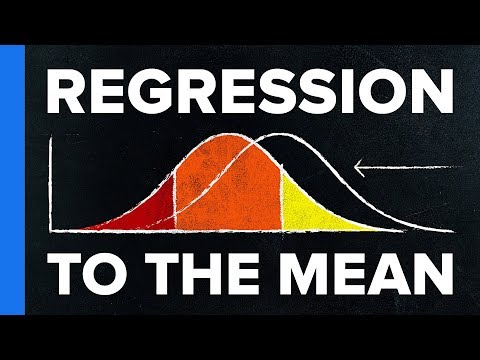
In briefA short Veritasium video explaining regression to the mean and how ignoring it leads to wrong conclusions about punishment versus reward, medical treatments and sports streaks. It uses the example of flight instructors who believed criticism works better than praise.
In briefMax Tegmark's MIT CBMM talk on why deep learning works so well. He argues that the laws of physics and the symmetries in physical data make it compressible into small neural networks, tying physics to network structure.
In briefA short smartphone-recorded clip from a 2014 event in Paris where DeepMind CEO Demis Hassabis presents an AI learning to play old Atari games. The system learns from only the video signal and the score. Audio quality is poor.
In briefSoren Johnson, a lead designer and AI programmer on Civilization games, discusses game AI design, including whether AI should cheat, behave like a human or be fun rather than strong. He uses the Civilization series as a case study.